Flora

Where Atlantic forest and Mediterranean scrub coexist in a singular territory

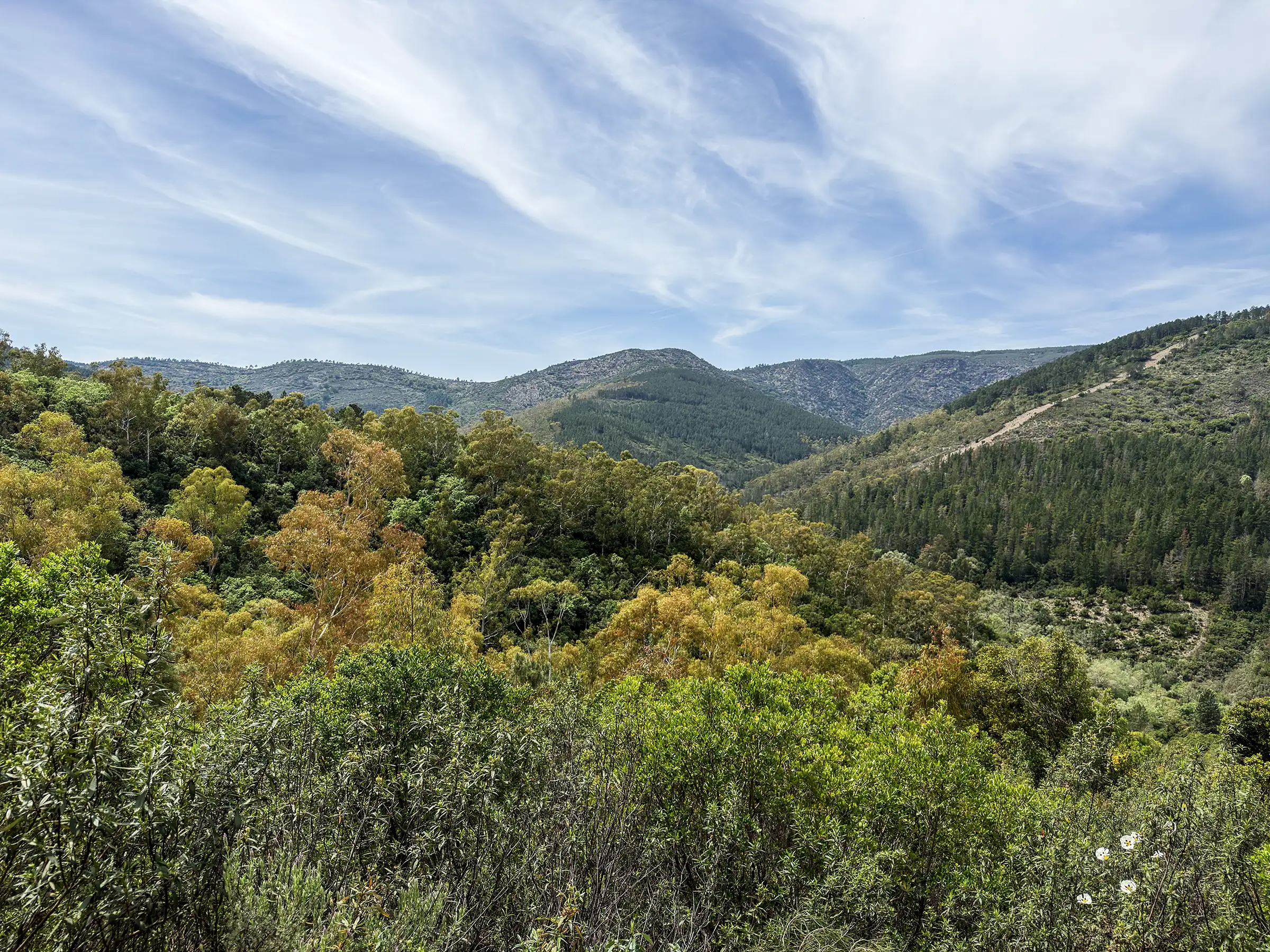
The position of the Sierra de Lagunilla, on the border between Castilla and Extremadura, makes its vegetation a unique mosaic. Within a few kilometres you can go from centuries-old oak and chestnut groves to hillsides scented with lavender and Rhododendron ponticum, or walk beside the river beneath the shade of alders and hazels. A diverse flora, shaped by centuries of traditional use and by the richness of the soil and water that define this corner of the Salamanca mountains.

Sierra de Lagunilla

Deciduous woodland

Pyrenean oaks and centuries-old chestnut trees dominate the sierra's shaded slopes. In autumn the forest catches fire in ochres and yellows, and the undergrowth fills with fungi and lichens. These are the territory's oldest woodlands, witnesses to centuries of foraging and rural life.
Riverside woodland

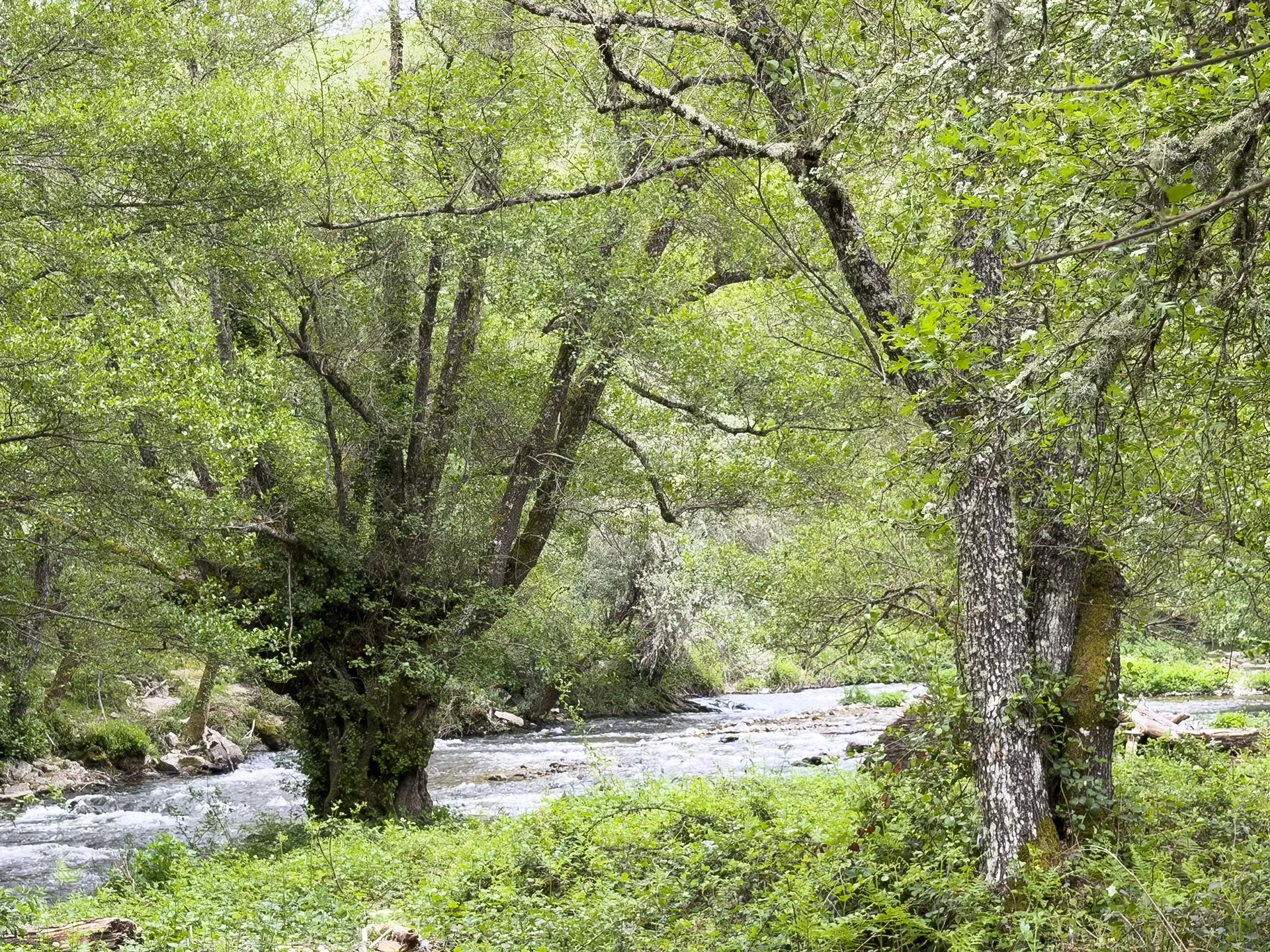
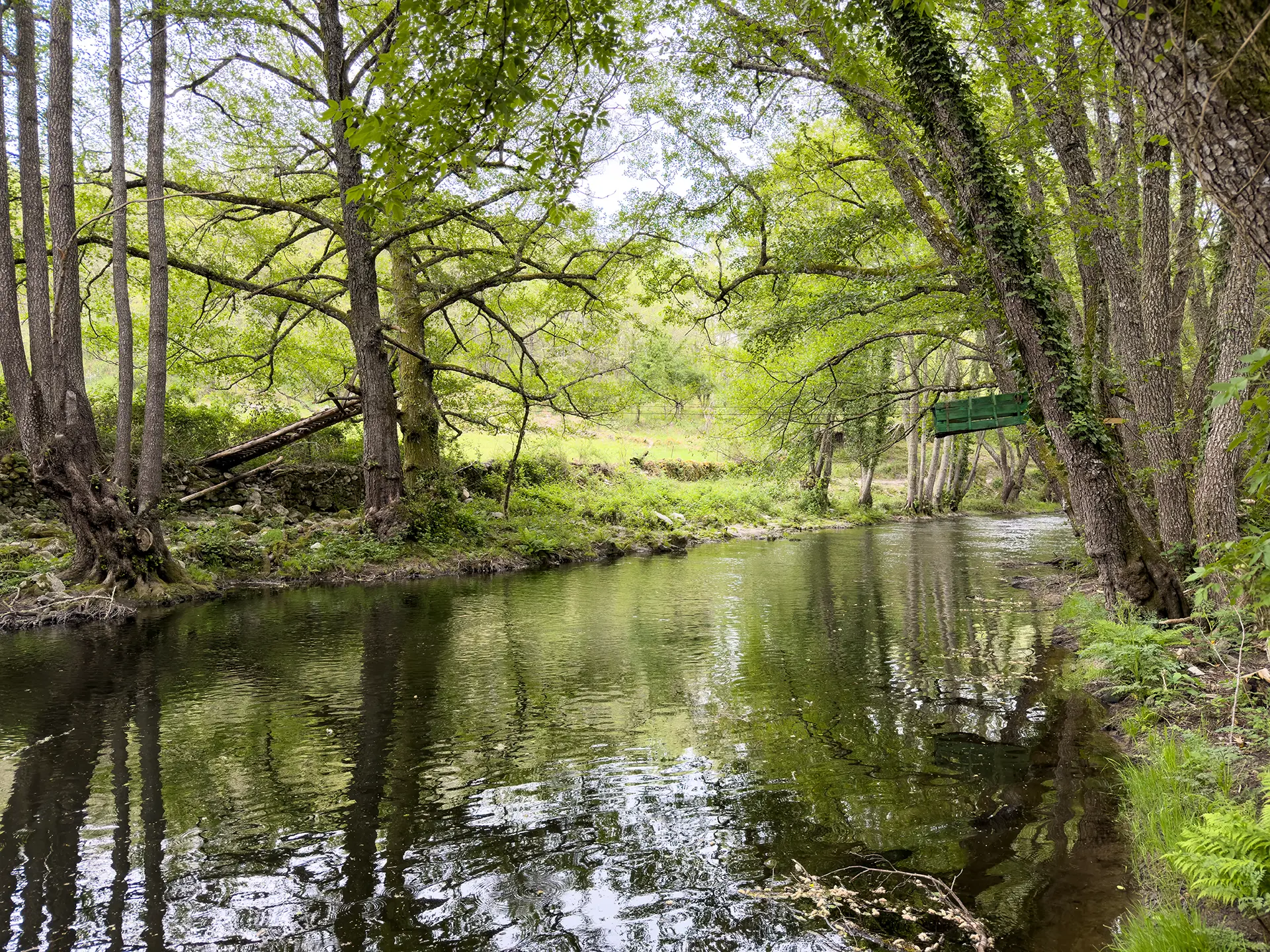
Beside the Cuerpo de Hombre river, alders, hazels and ash trees form a dense, cool green corridor. This green corridor is one of the sierra's most valuable habitats: a refuge for wildlife, a natural water filter and a landscape of great beauty in any season.
Planted woodland

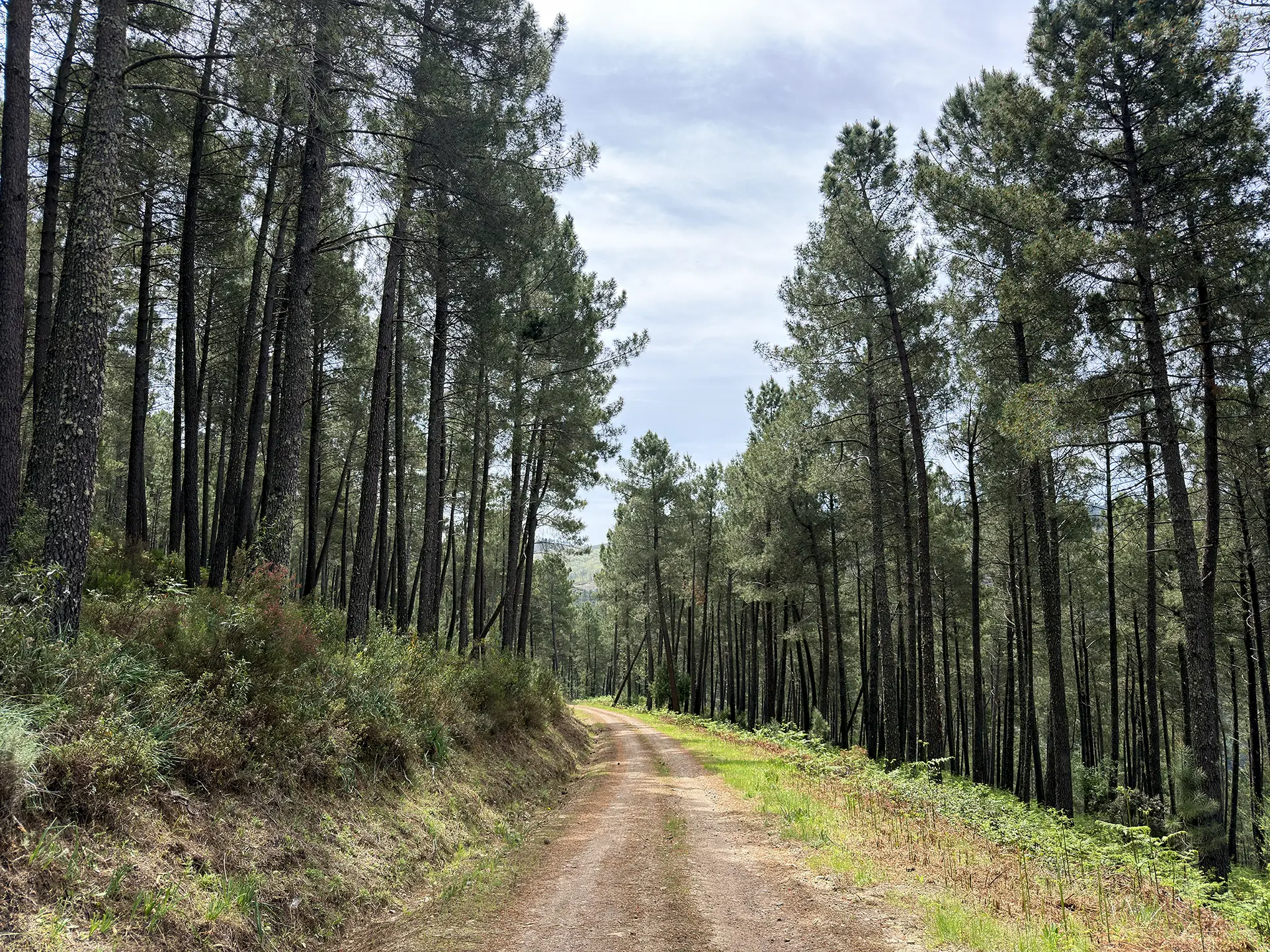
Pine forests and cultivated chestnut groves tell the story of Lagunilla's economy. Planted for timber and resin production, they now make up much of the landscape you pass through on the trails, a living legacy of the relationship between the village and its sierra.
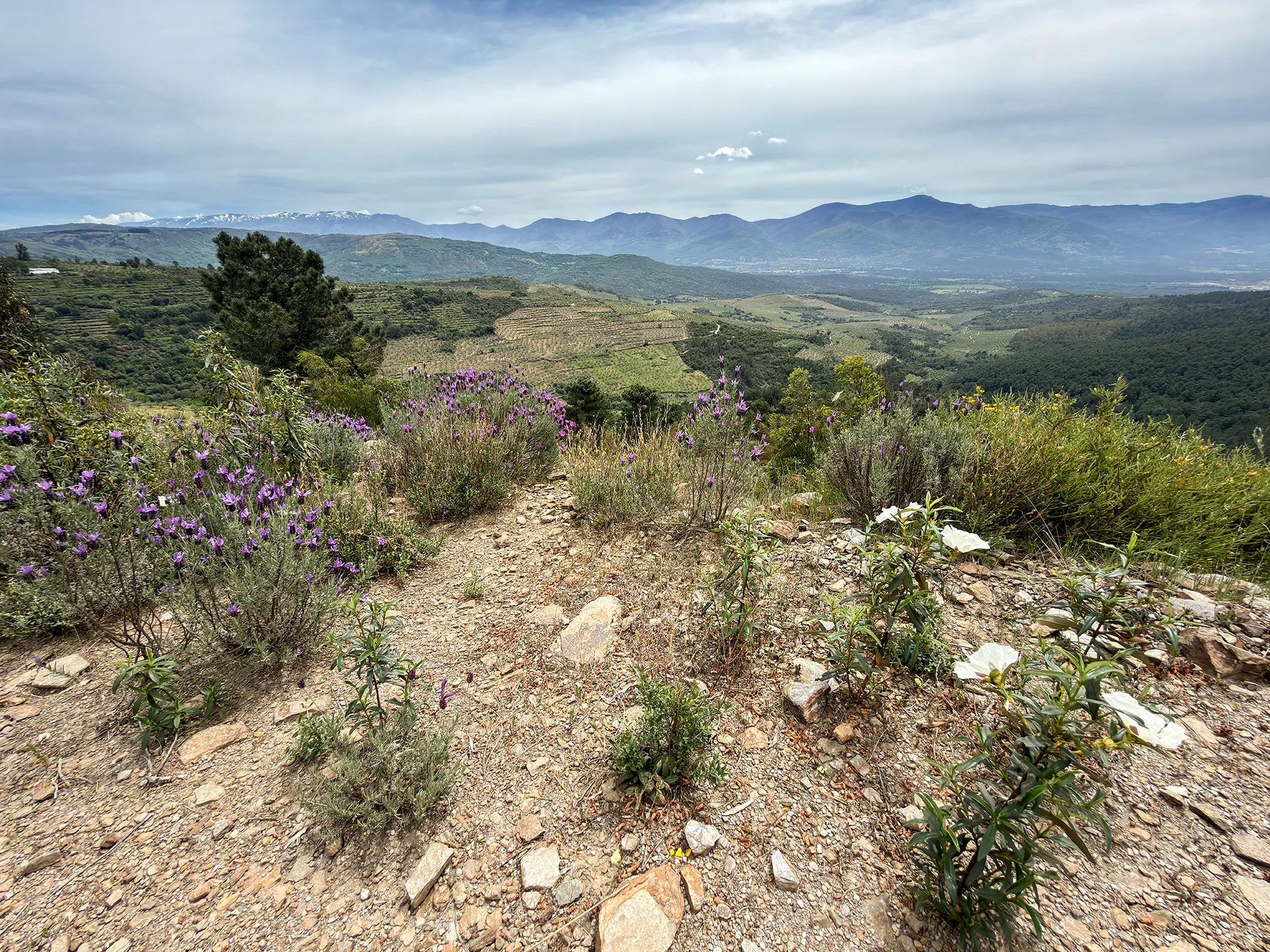
Mediterranean scrub and hillside

On the sunlit slopes, lavender, Rhododendron ponticum and asphodel mark the passing seasons with their blooms. Blackberry bushes and wild roses line the edges of paths and boundaries. A mosaic of scents and colours with a strong Mediterranean character.
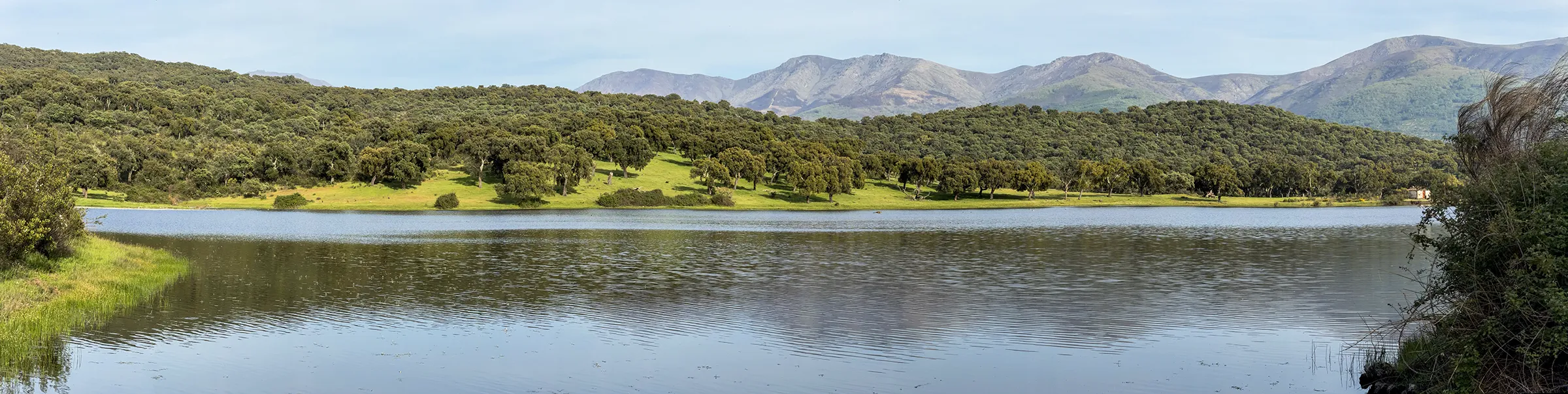
Deciduous woodland
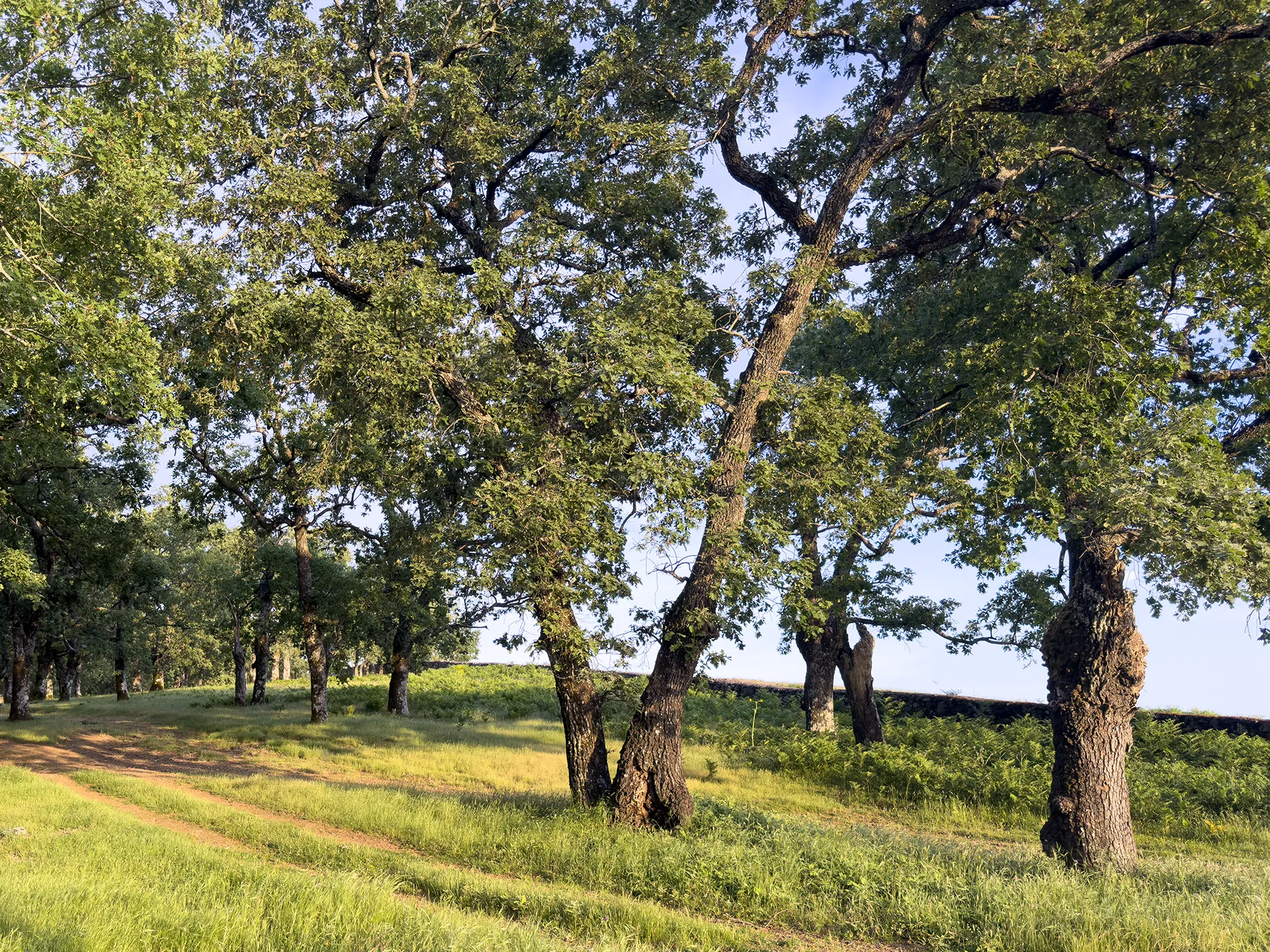
Pyrenean oak

Quercus pyrenaica

The dominant tree of the sierra. Adapted to poor soils and dry summers, it forms dense stands on the north-facing slopes. Its distinctive rounded lobed leaves stay dry on the branch throughout winter, a rarity among Iberian deciduous trees.

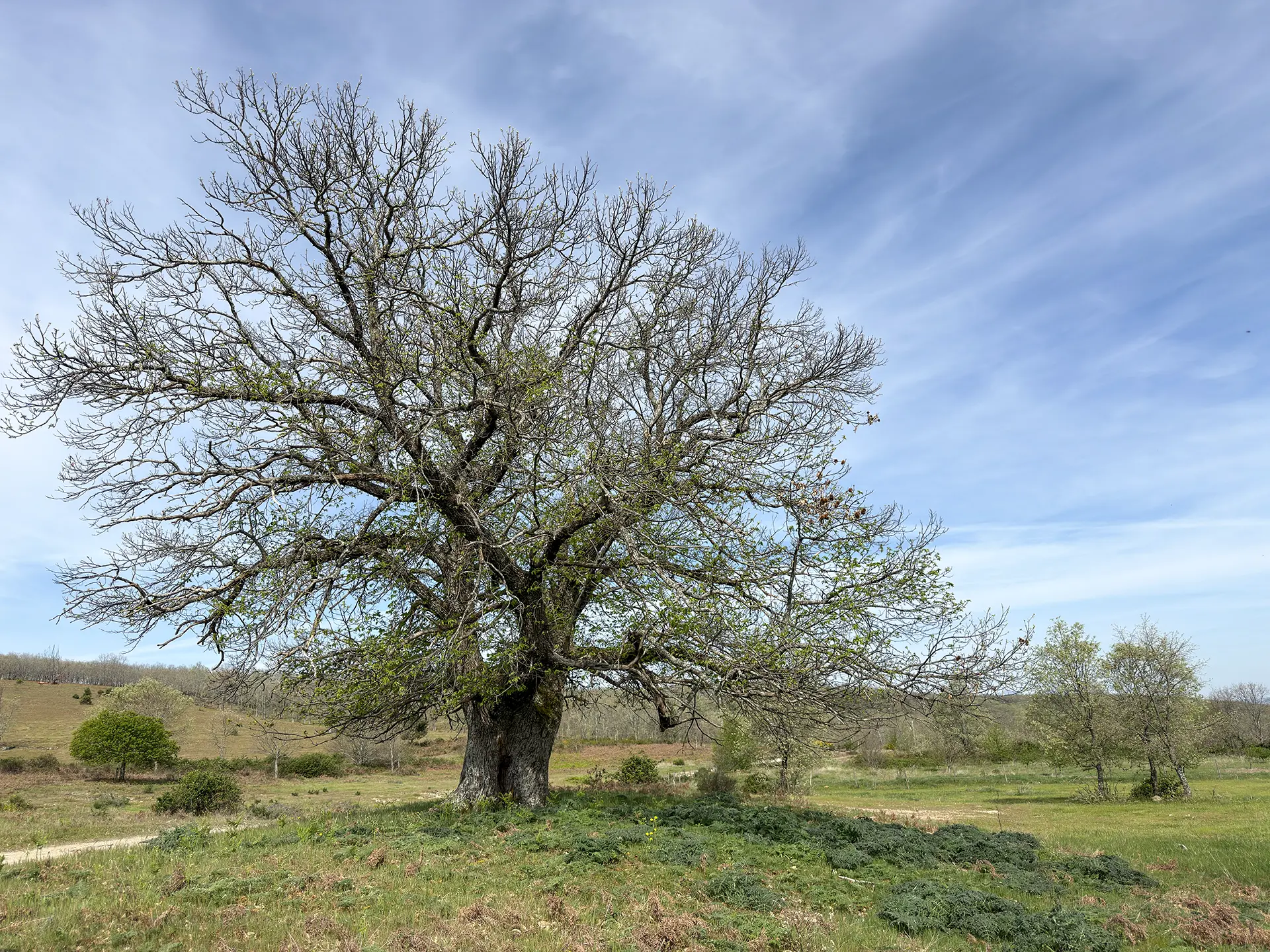
Chestnut

Castanea sativa

Introduced centuries ago for its fruit and timber, the chestnut forms impressive stands in the valley bottoms. The oldest specimens reach extraordinary sizes. In October, chestnut gathering remains a living tradition in the sierra.

Riverside woodland


Alder

Alnus glutinosa

The tree of the water. The alder grows with its roots in the river, stabilising the banks and casting shade over the watercourse. Its roots host bacteria that enrich the soil with nitrogen, making riverside woodland one of the territory’s most fertile ecosystems.

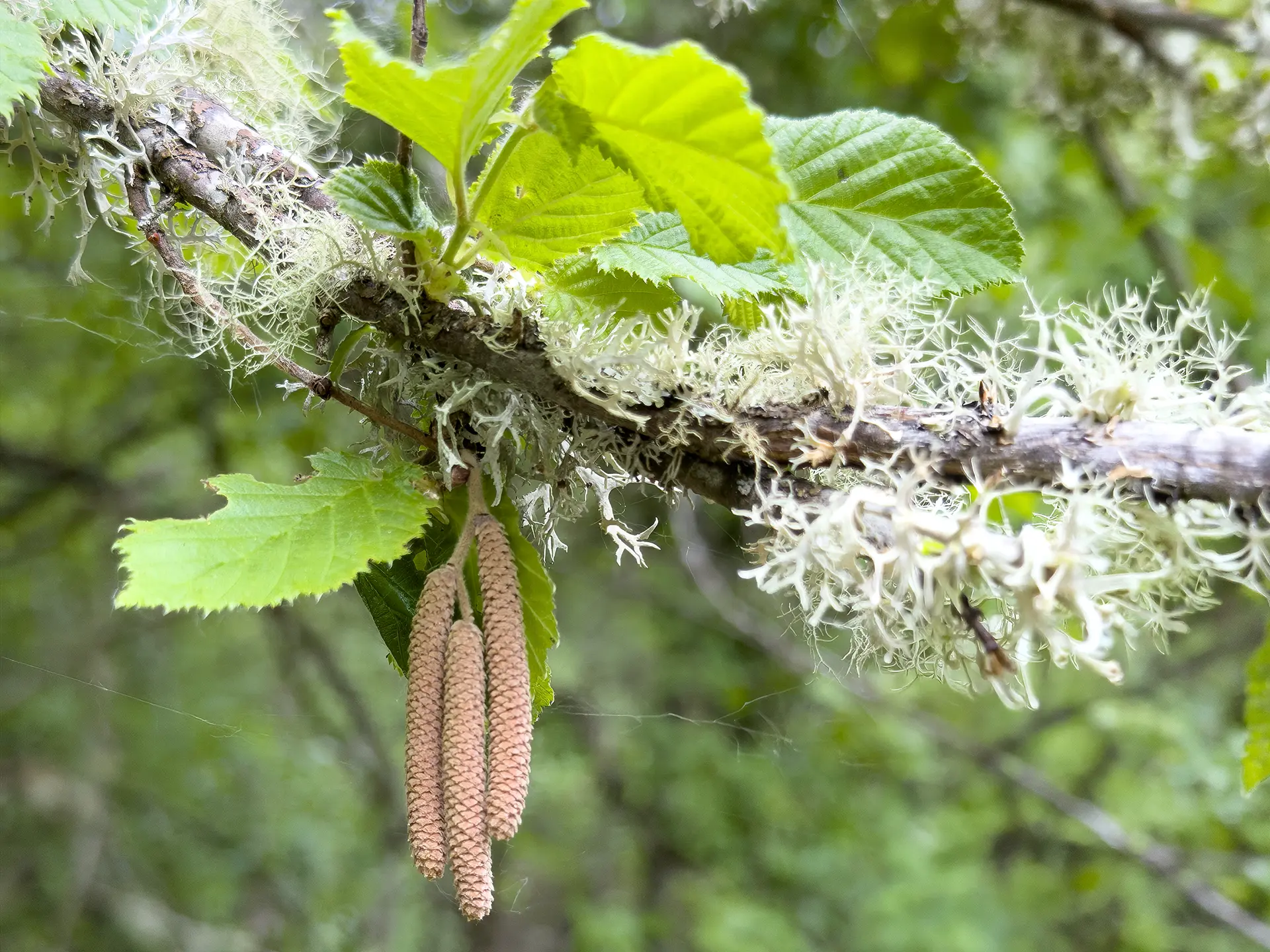
Hazel

Corylus avellana

An elegantly shaped shrub that forms dense undergrowth beside the river. It flowers in the depths of winter, before the leaves appear, with striking yellow catkins. Its fruit, hazelnuts, are key food for wildlife and were traditionally gathered in the sierra.

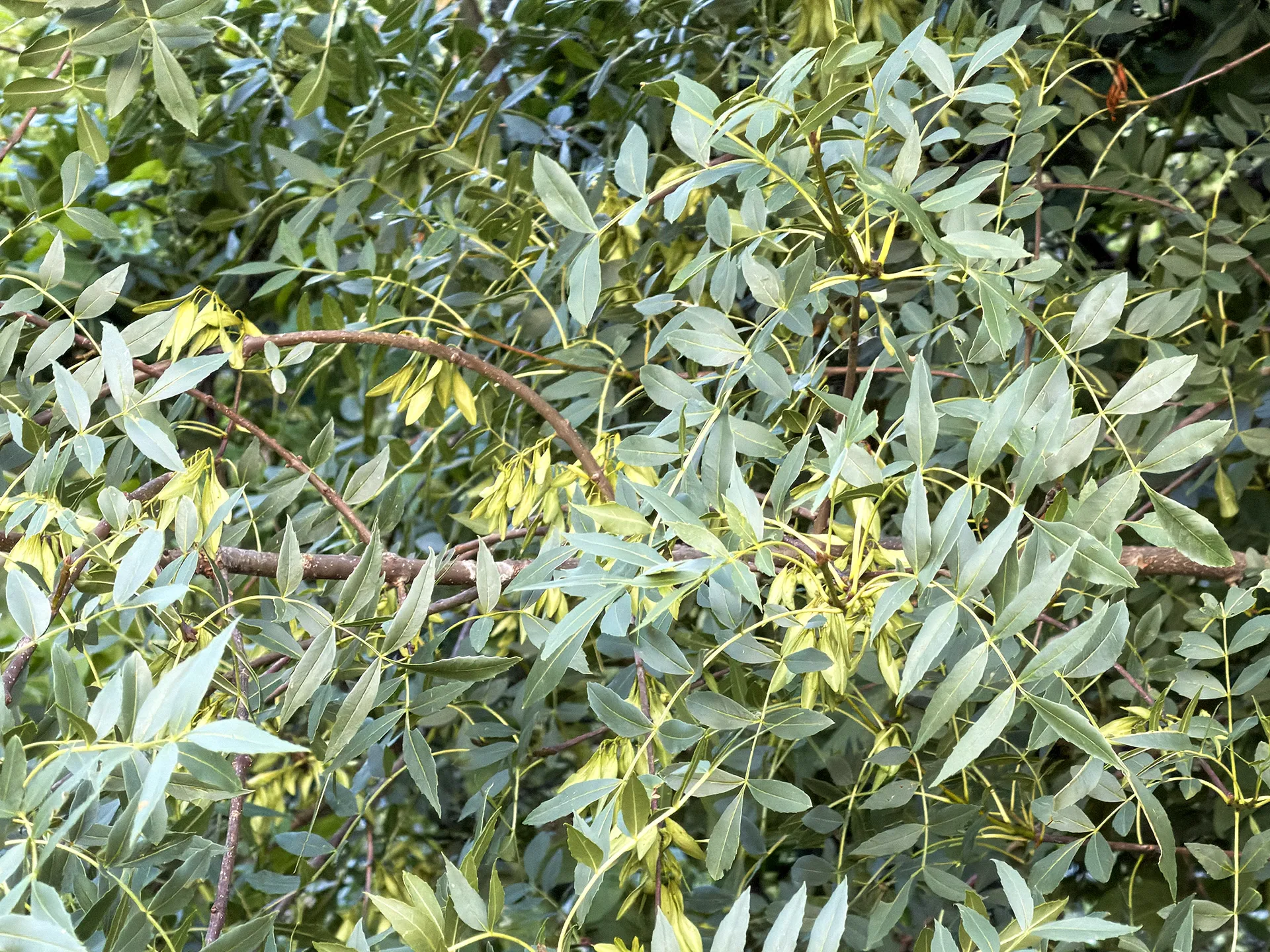
Narrow-leaved ash

Fraxinus angustifolia

The ash closes off the riparian gallery in the more open stretches of the river. Prized for its timber, for centuries it was a multi-purpose tree: tool material, fodder and shade for livestock. Today its tall crowns provide nesting sites and shelter for numerous birds.

Planted woodland


Maritime pine

Pinus pinaster

Planted in the mid-20th century to curb erosion and supply the resin industry, maritime pine covers large areas of the sierra. Its undergrowth, sparser than that of the oak groves, nonetheless supports rockrose, heather and wildlife adapted to these open, sunlit spaces.

Mediterranean scrub and hillside

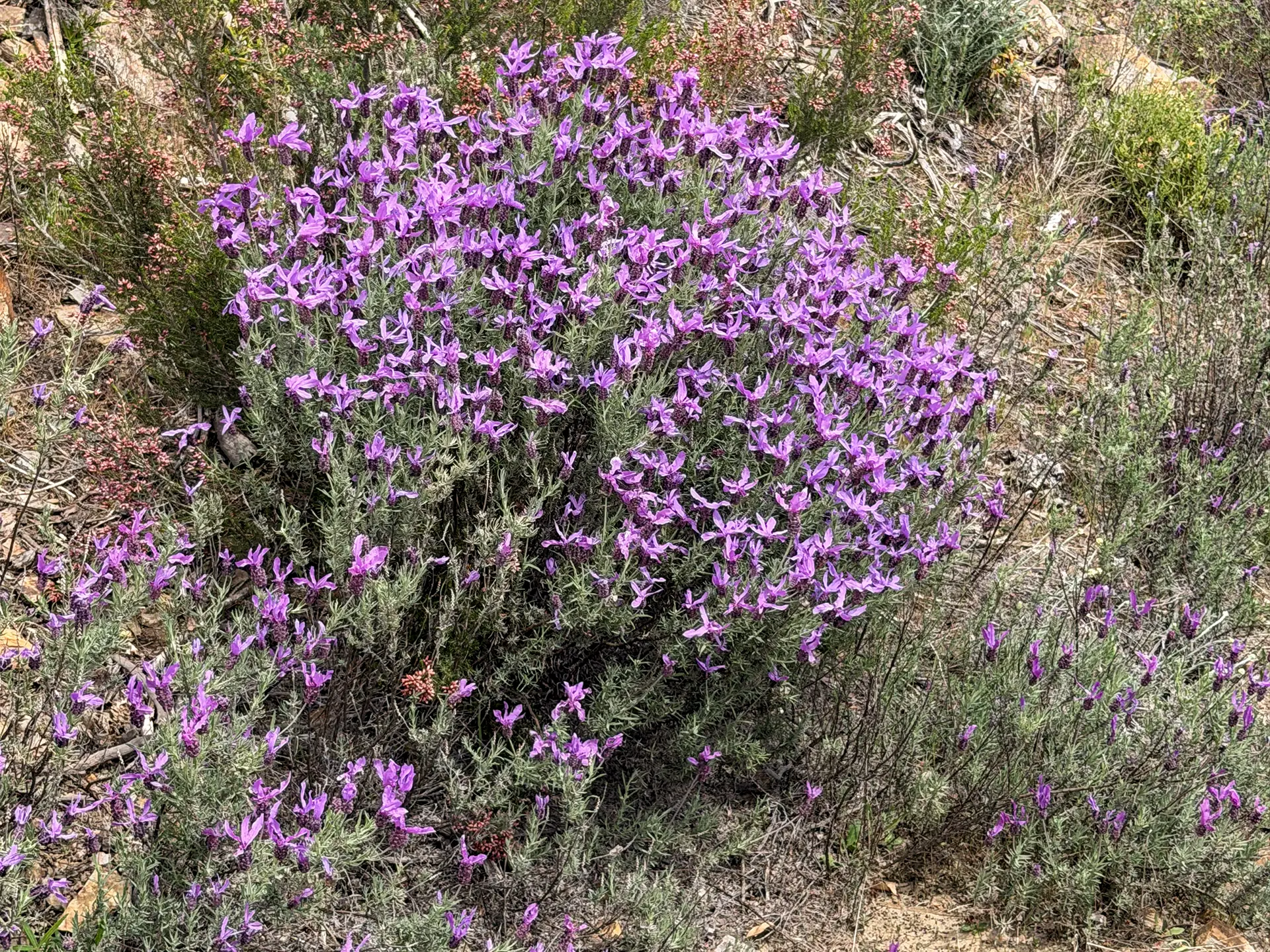
Lavender

Lavandula stoechas

On the south-facing slopes, the scent of lavender announces spring before its colours arrive. It flowers between April and June with striking violet flowerheads. Very abundant in the sierra, it is one of the most characteristic scents of a walk through the Mediterranean scrub.

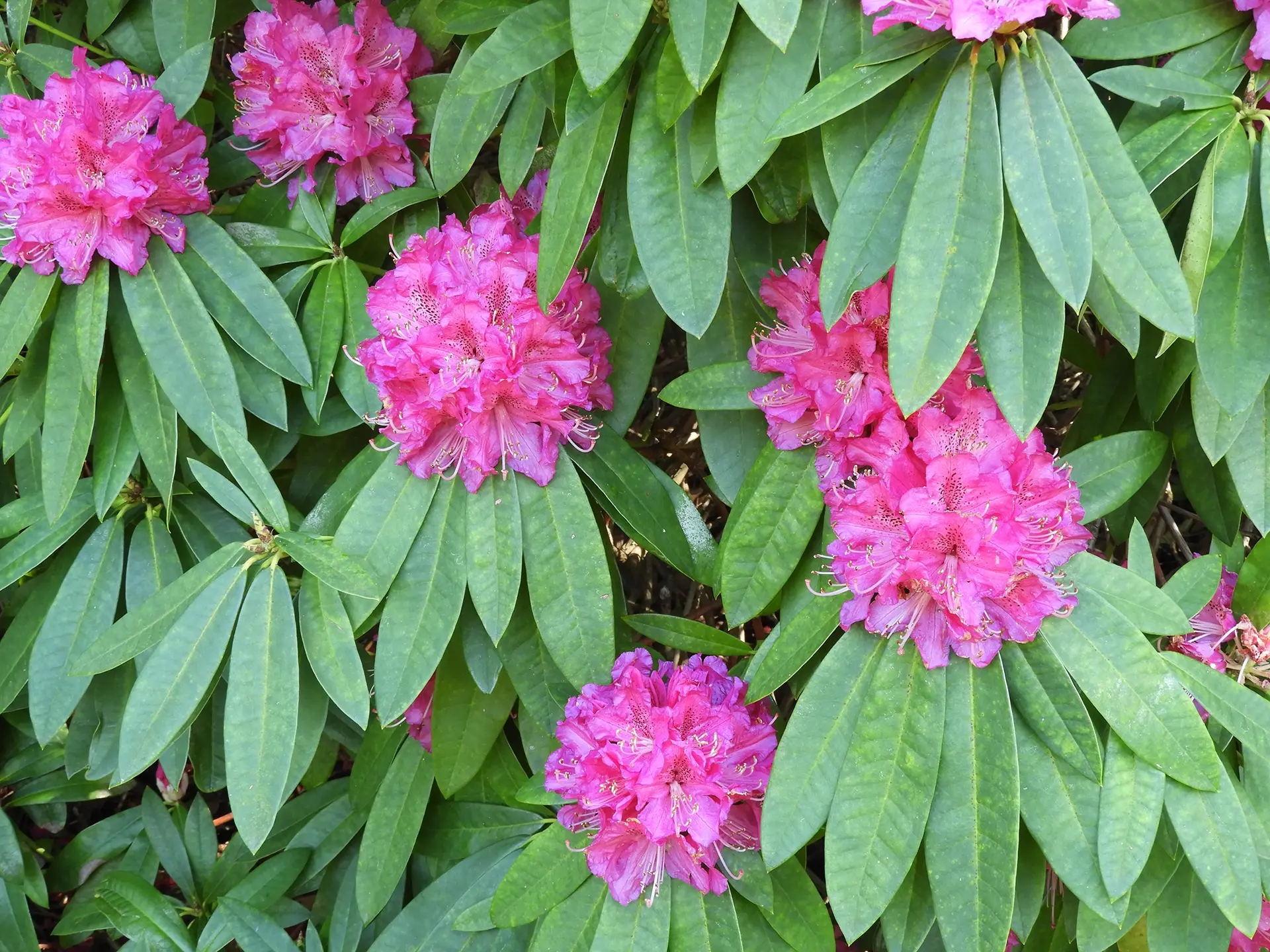
Rhododendron ponticum

Rhododendron ponticum

A botanical rarity on the Iberian Peninsula. It grows on damp, shaded slopes, forming patches of intense, glossy green. In spring its pink and purple flowers make it one of the sierra’s most striking floral displays.

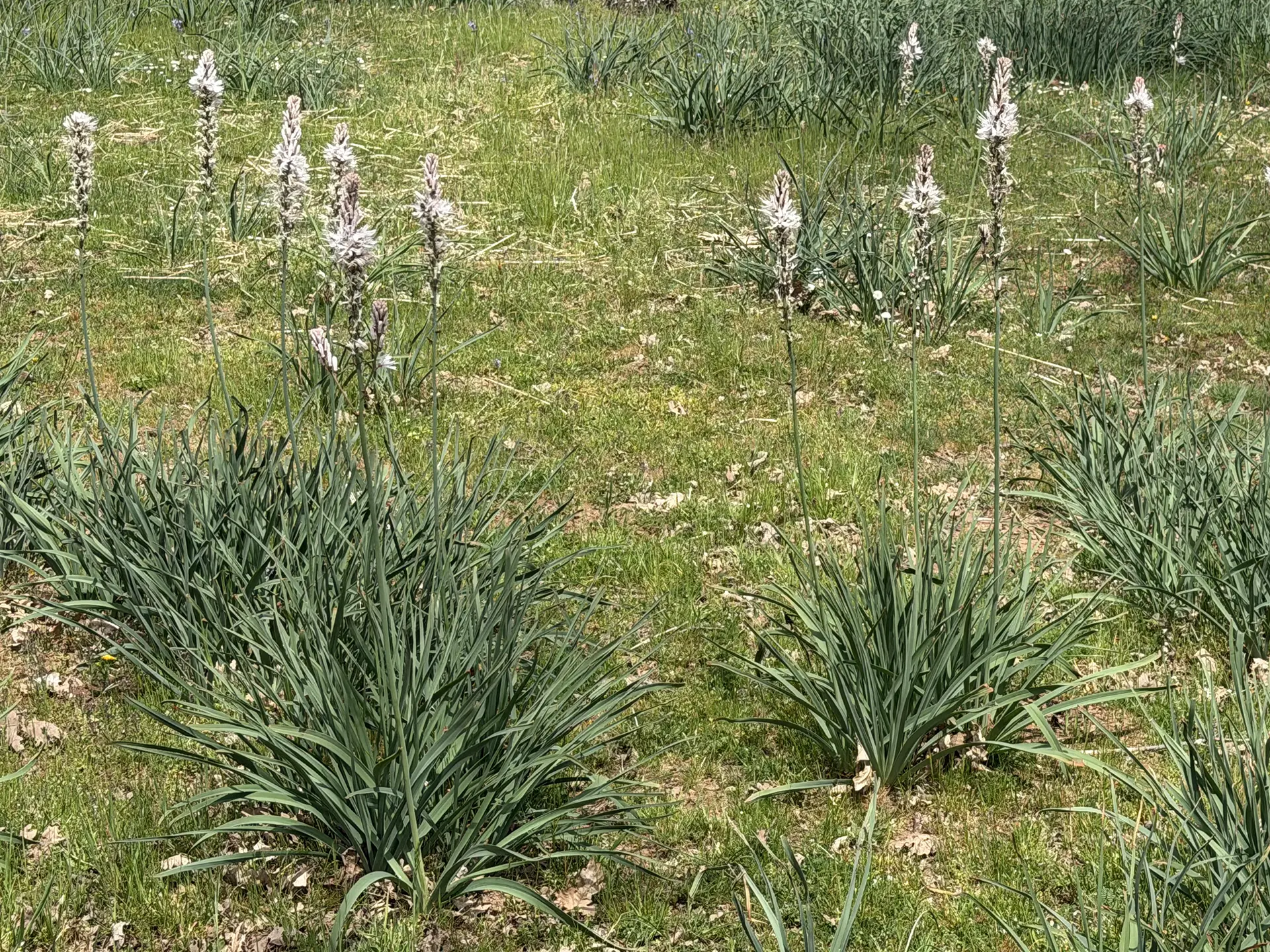
Asphodel

Asphodelus ramosus

Its tall white spikes, visible from a distance in spring, are a historical indicator: wherever asphodel is abundant, the land has been grazed for centuries. A plant with a strong presence in the landscape, it was considered magical in antiquity and remains one of the most characteristic flowers of the open hillsides.

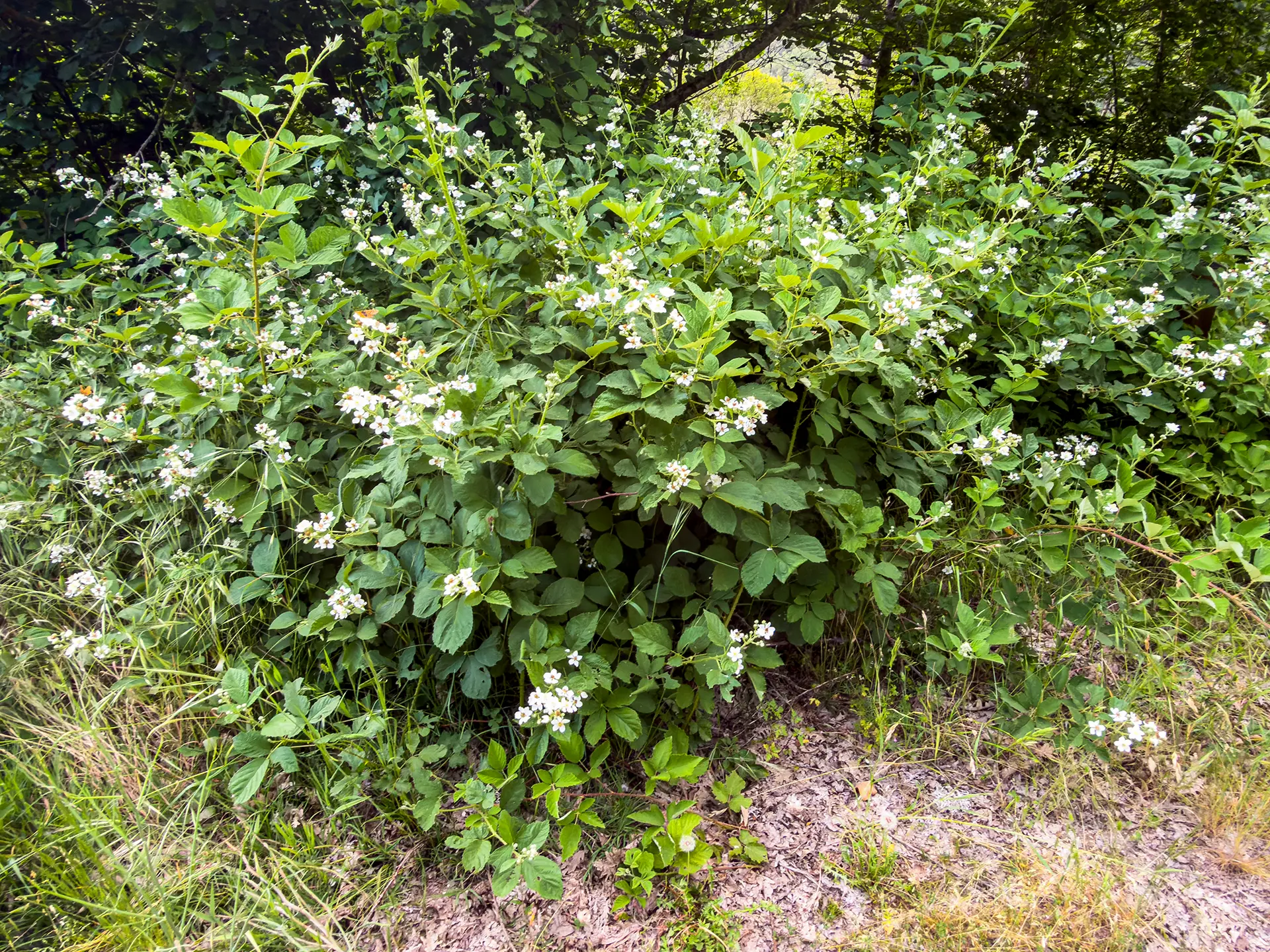
Blackberry

Rubus ulmifolius

A constant presence along paths and boundaries, the blackberry bush serves a double purpose: its white flowers attract pollinators in summer, and its black fruit feeds foxes, badgers and birds in autumn. It was also a wild fruit traditionally gathered by the sierra’s inhabitants.

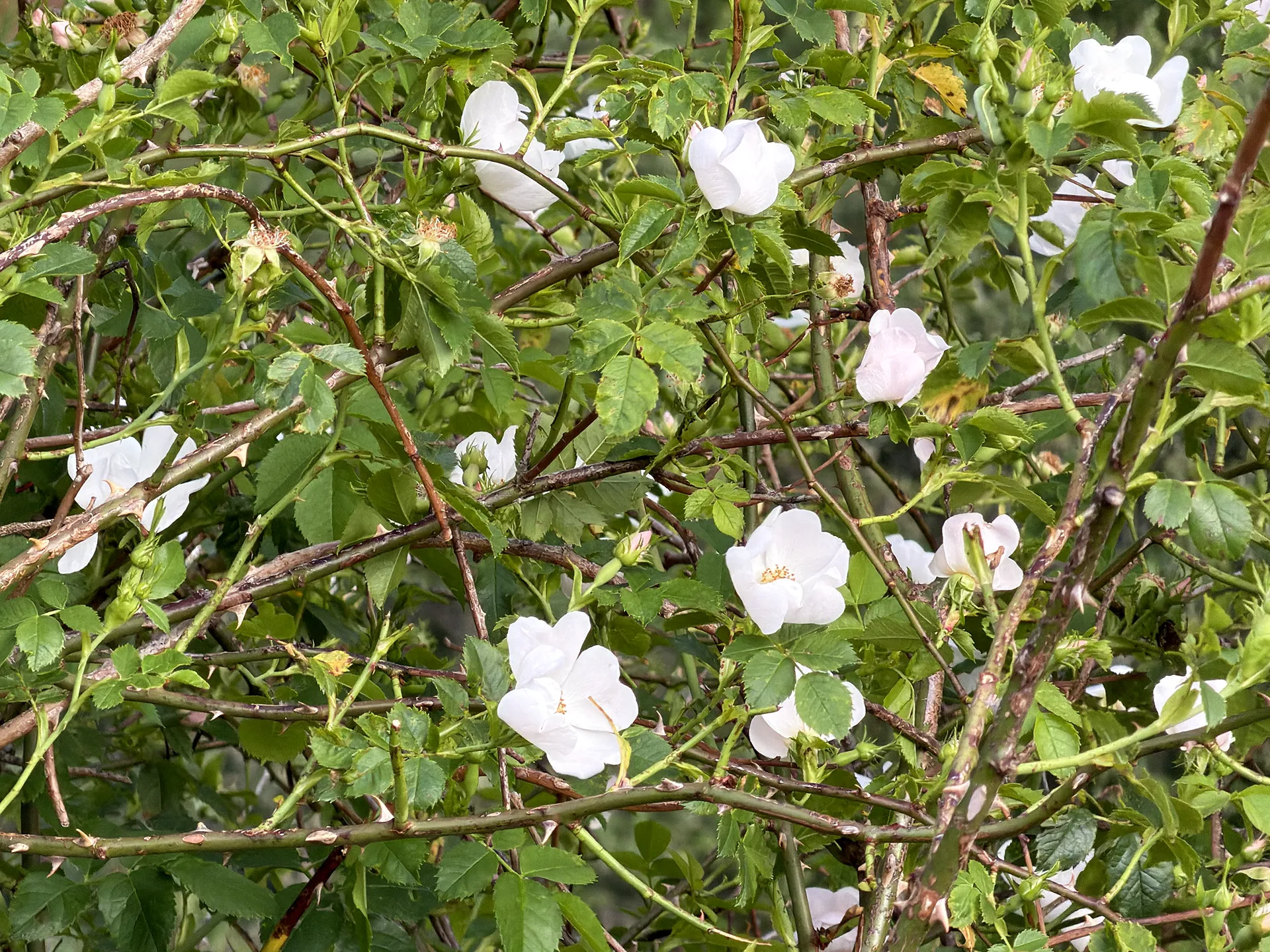
Dog rose

Rosa canina

The dog rose lines hedges and pathsides with its delicate, fragrant five-petalled pink flowers. In autumn it produces rosehips, red fruits rich in vitamin C that wildlife eagerly consumes and that have always been used in the sierra for infusions and jams.

Hawthorn

Crataegus monogyna

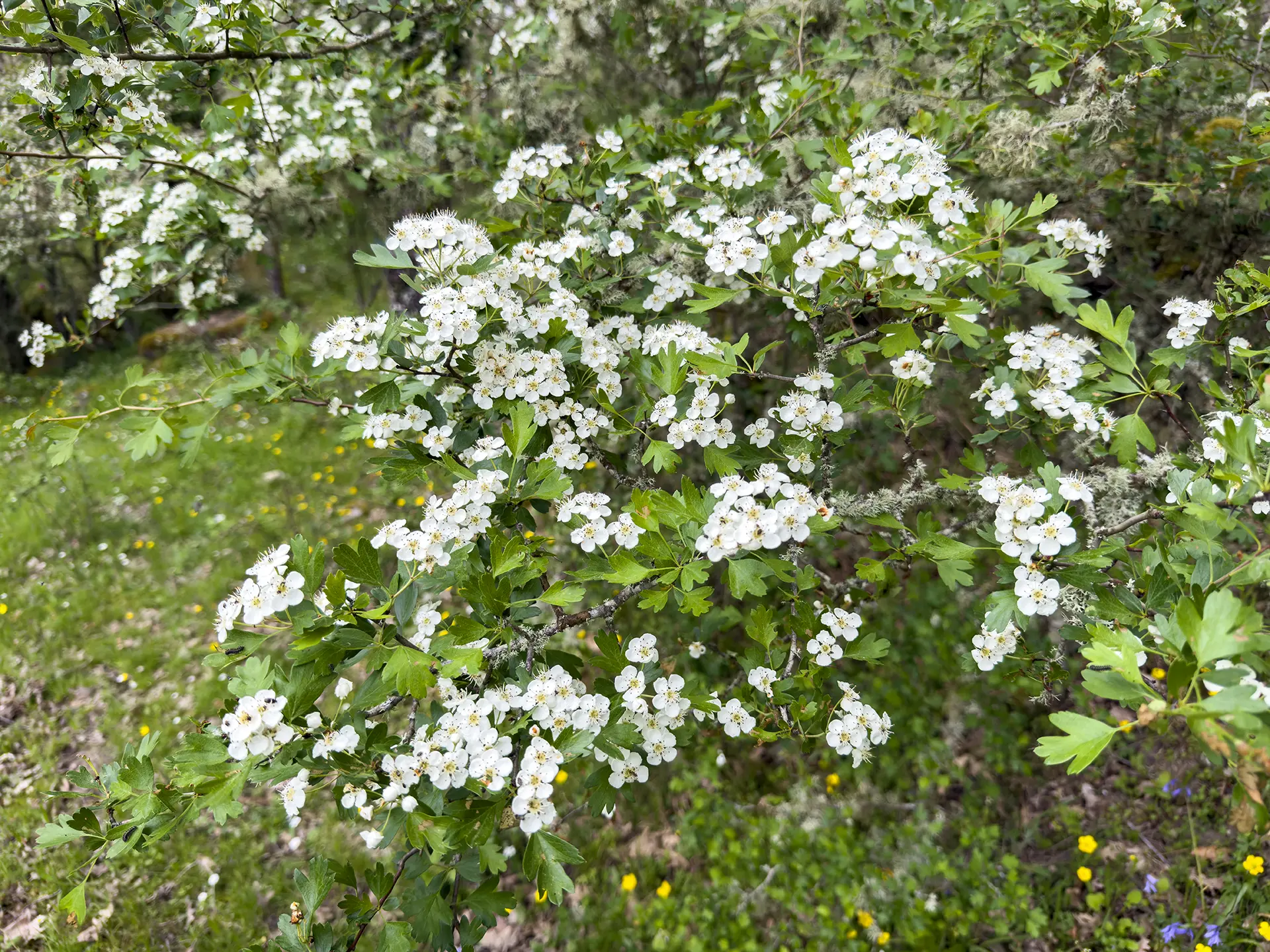
One of the sierra’s most generous shrubs. In spring it is covered in white flowers that scent the pathsides, and in autumn its branches fill with red berries that feed thrushes, robins and other birds. Its thorny branches form almost impenetrable natural hedges, an ideal refuge for wildlife.

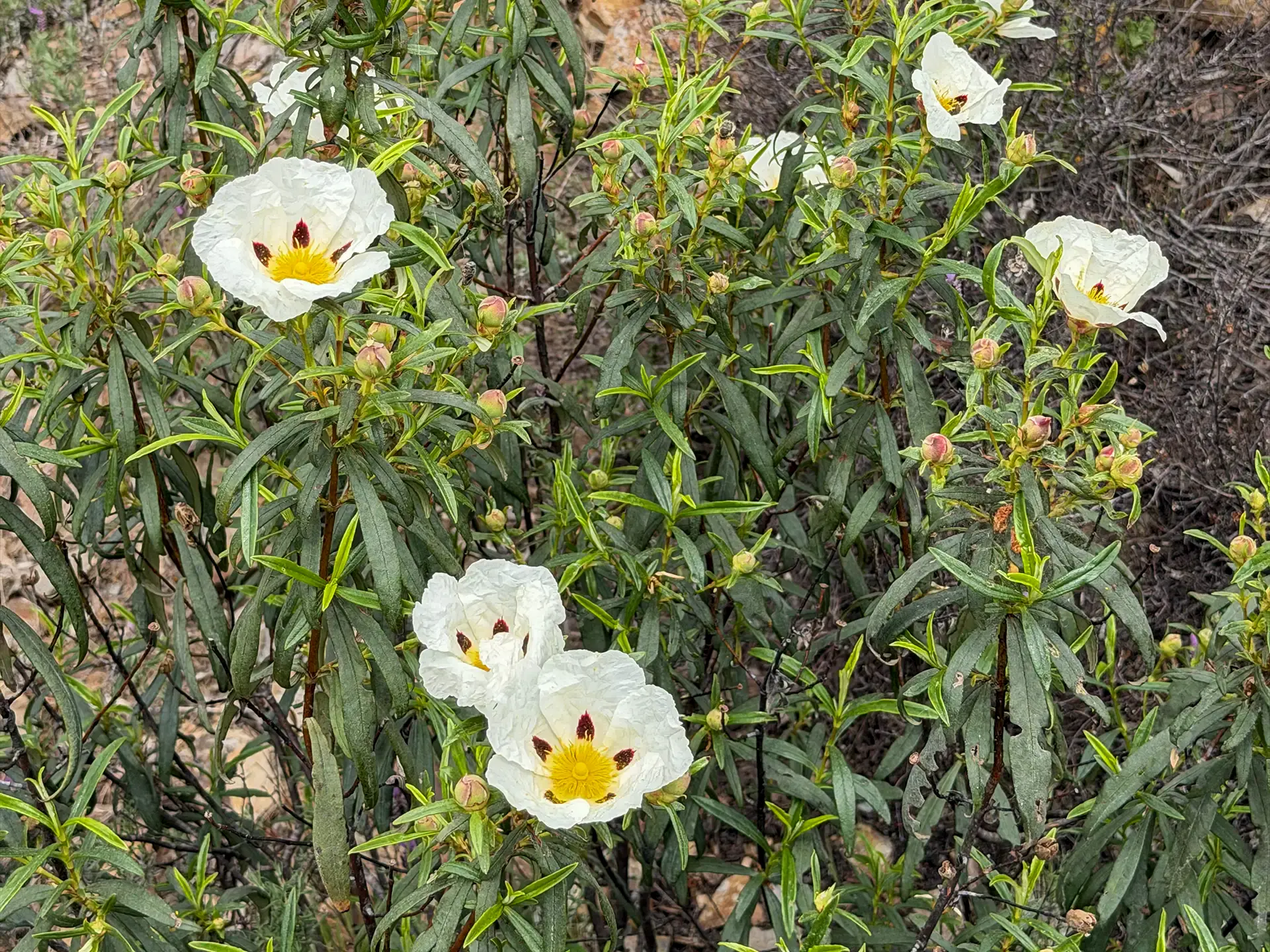
Gum rockrose

Cistus ladanifer

The gum rockrose is one of the most characteristic plants of the sierra’s Mediterranean slopes. Resistant to drought and fire, it quickly colonises disturbed ground. In spring its large white flowers with a red blotch at the base create a striking, short-lived display. Its aromatic resin, labdanum, has been used since antiquity for medicinal and ritual purposes.

Take nature in your pocket


iNaturalist
Identify fauna and flora by photographing them. A global scientific community verifies your observations. Available in Spanish for iOS and Android.

Pl@ntNet
Identify any plant by photographing its leaves, flowers or fruit. A citizen science project with millions of images of flora from around the world.