
Birds of the Sierra de Lagunilla
Where the sky belongs to birds of prey and the river sings with the kingfisher
The Sierra de Lagunilla is one of those places where birdwatching stops being an activity and becomes an experience. Large birds of prey glide over the crags, the black stork hides in the most inaccessible cliffs and the kingfisher moves along the Cuerpo de Hombre like a flash of colour. All the species listed here can be observed in the territory, along the trails or from the hide.
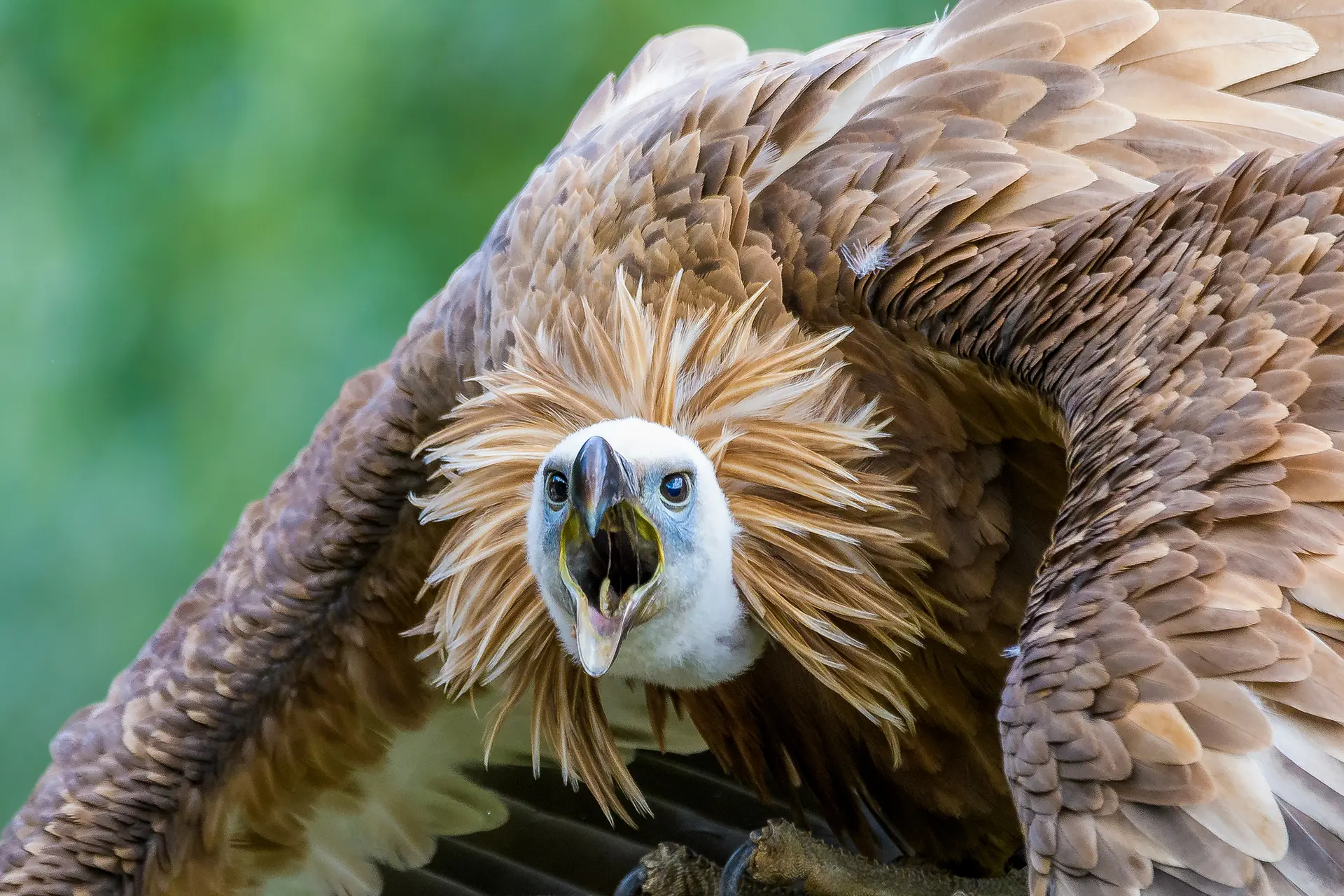
Griffon vulture
Gyps fulvus
The sierra’s most abundant scavenger. It is recognised in flight by its huge wingspan, which exceeds two and a half metres, and by its broad wings with dark tips fanned out like fingers. It forms large groups to feed and rides thermal currents to glide for hours, barely moving its wings.
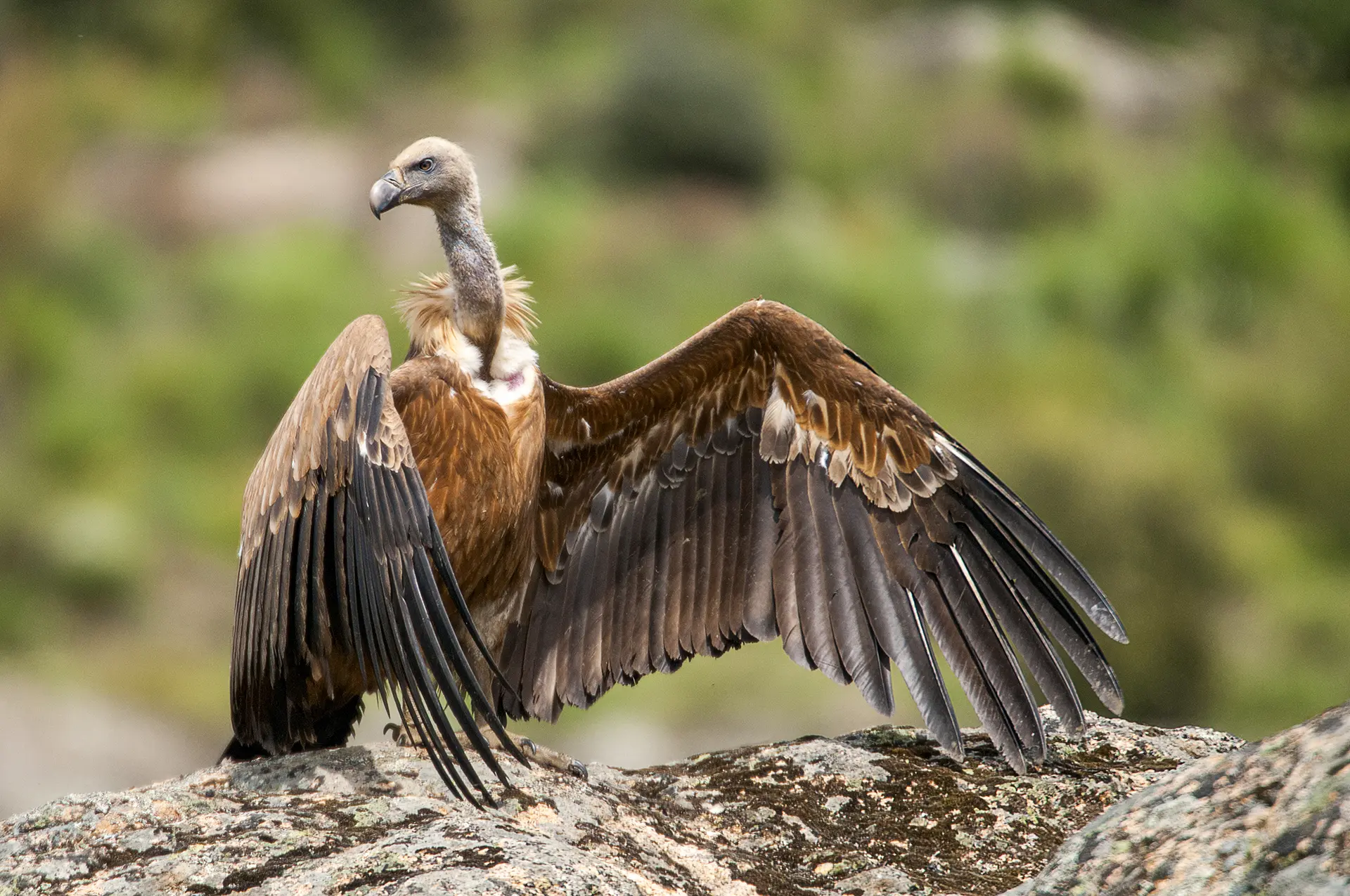
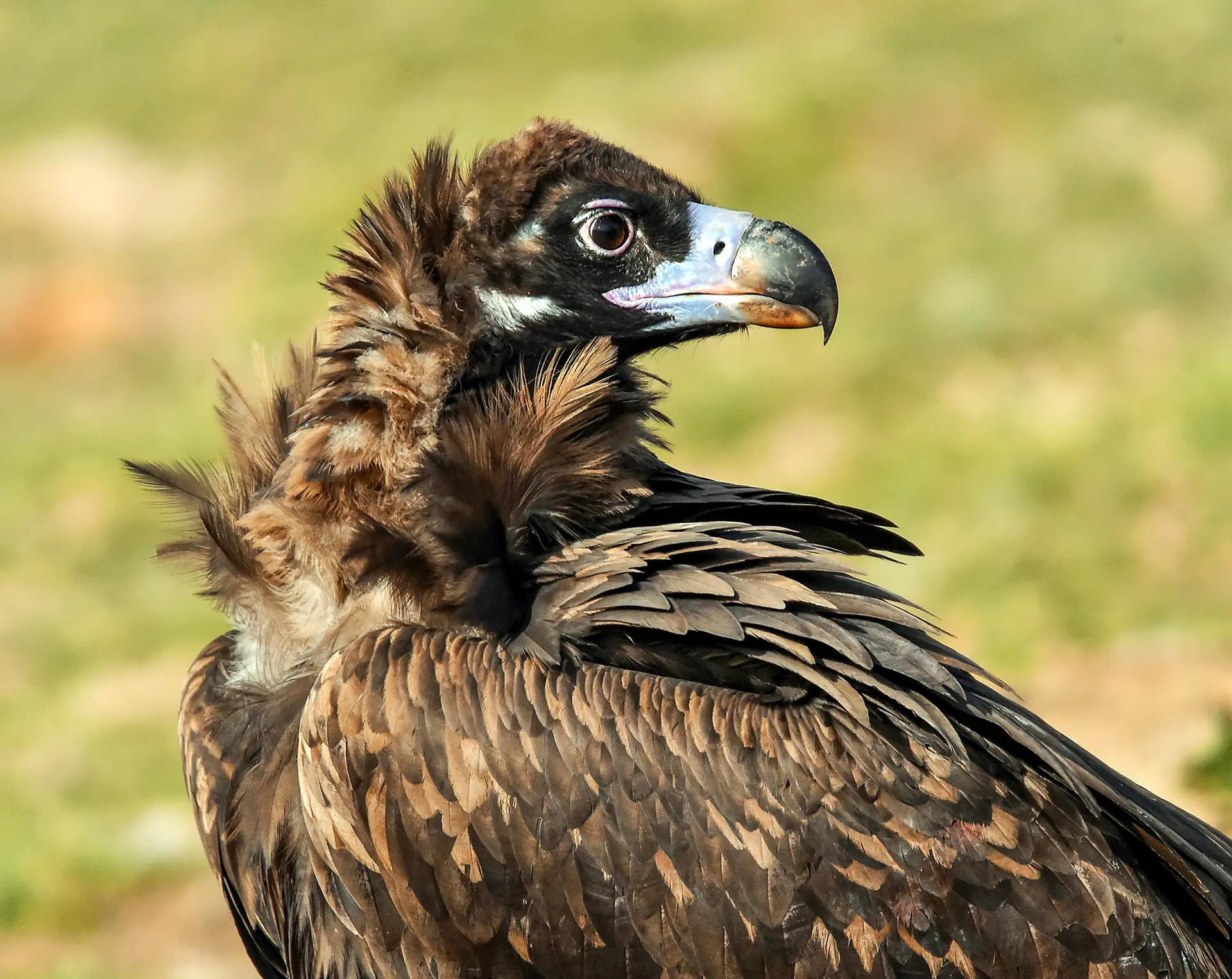
Cinereous vulture
Aegypius monachus
Europe’s largest bird of prey, with a wingspan of almost three metres. Its dark plumage and more solitary flight distinguish it from the griffon vulture. The Sierra de Francia and Las Quilamas are among its confirmed breeding strongholds in Castilla y León, making the area around Lagunilla a prime spot for observing it.
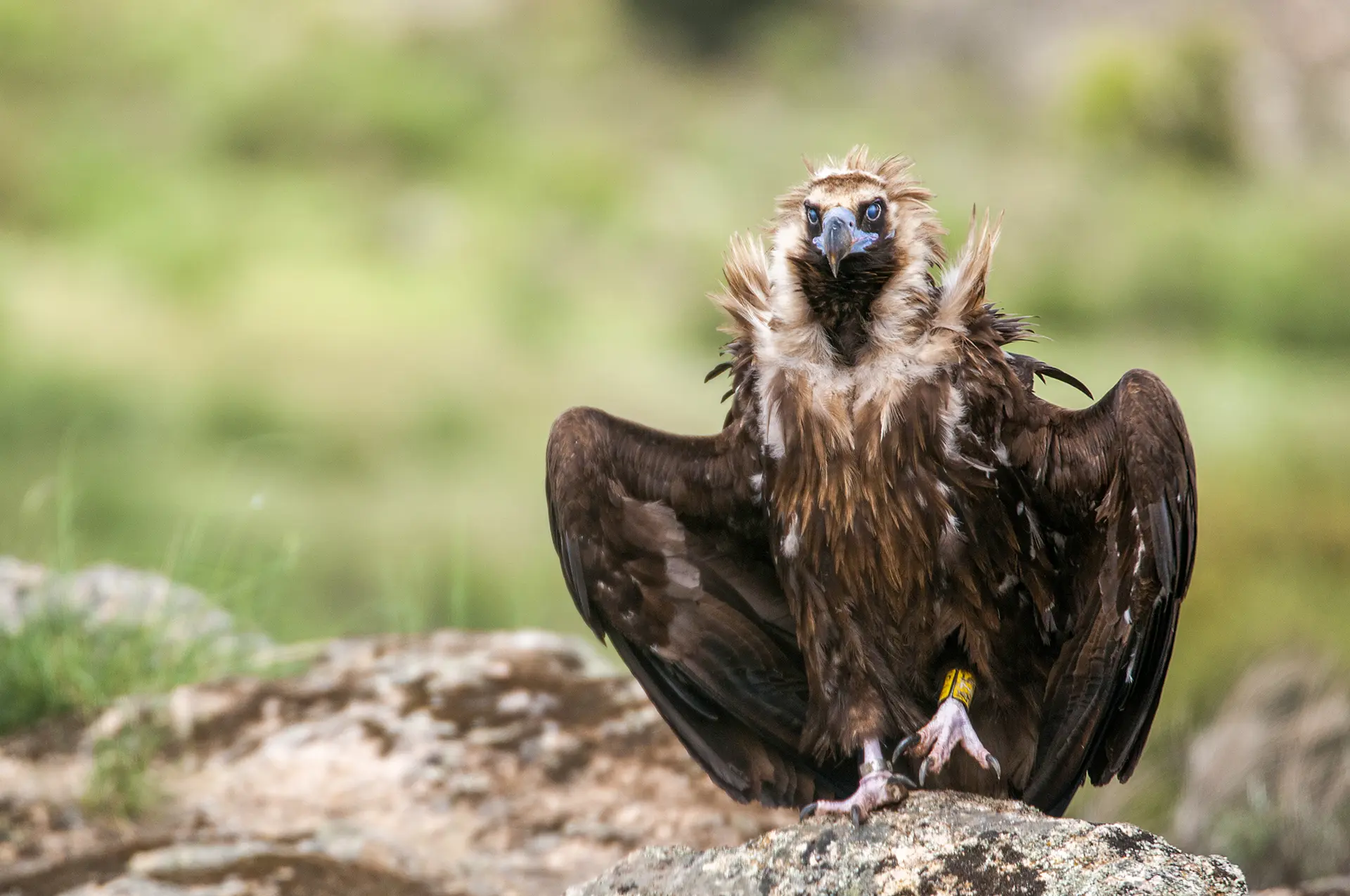
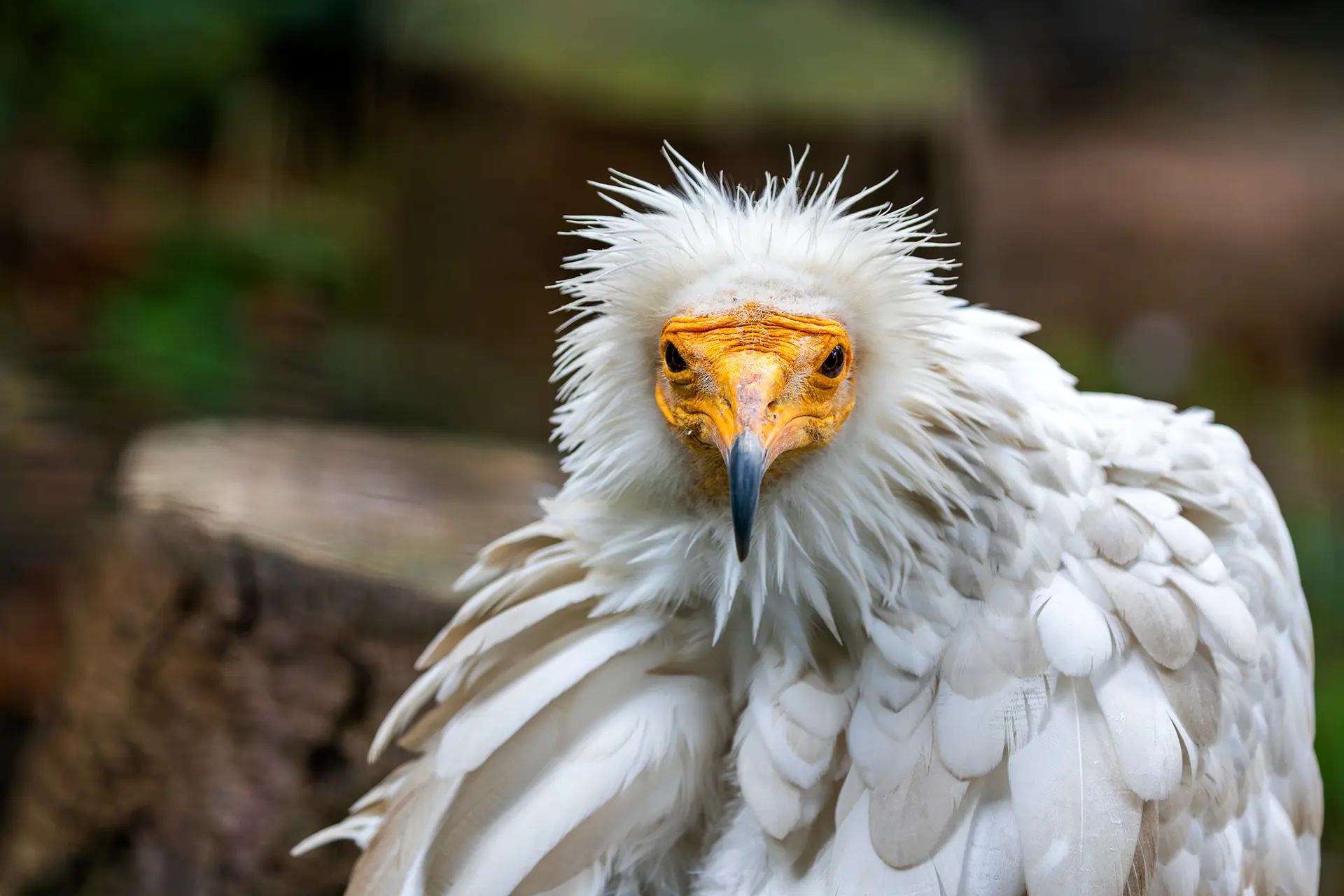
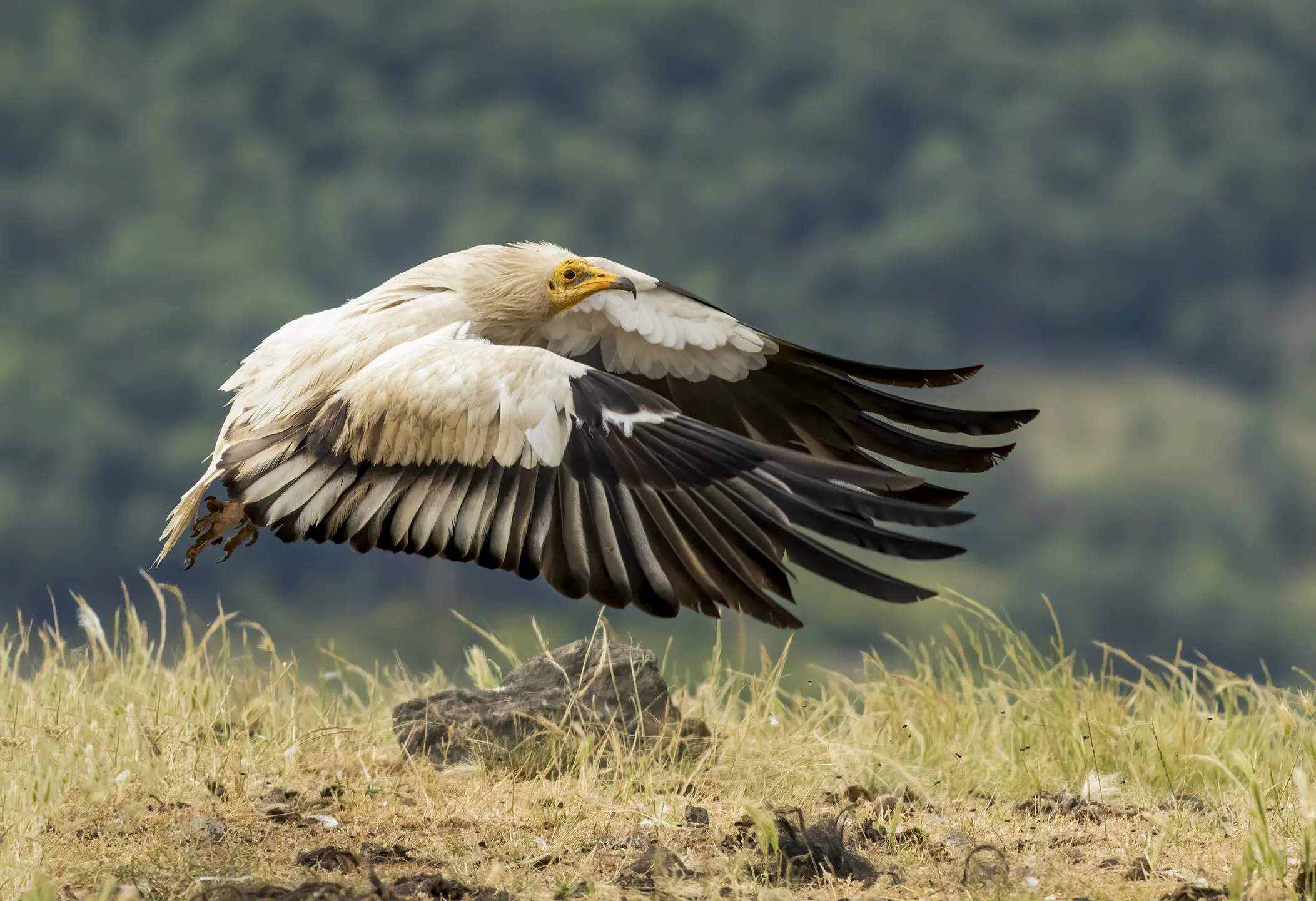
Egyptian vulture
Neophron percnopterus
The smallest of Europe’s vultures arrives in the sierra in spring and leaves for sub-Saharan Africa in autumn. Its black-and-white plumage and yellow face make it unmistakable. A vulnerable species, its presence at the Lagunilla feeding station offers an exceptional opportunity to photograph it at very close range.

Black stork
Ciconia nigra
More elusive and scarce than its white relative, it nests on rocky cliffs and in dense woodland far from human presence. Its black plumage with metallic sheen and white belly make it easy to distinguish. The Sierra de Francia holds one of the most important breeding populations on the Iberian Peninsula.

Kingfisher
Alcedo atthis
Its flash of blue and orange over the waters of the Cuerpo de Hombre is one of the riverside’s most striking sights. It hunts by diving from a branch with near-infallible precision. Its presence on the river is also a reliable indicator of excellent water quality.

White-throated dipper
Cinclus cinclus
The only European bird able to walk along riverbeds in search of larvae and invertebrates. More discreet than the kingfisher, it gives itself away with its characteristic bobbing motion when perched on rocks. Like the kingfisher, its presence confirms the excellent health of the river ecosystem.

Eurasian jay
Garrulus glandarius
A noisy inhabitant of oak and chestnut groves, heard before it is seen. Its brown plumage with a blue patch on the wing makes it unmistakable as it crosses the forest. It plays a key role in oak regeneration, burying acorns it forgets to recover, which then germinate the following year.

Hoopoe
Upupa epops
Its striking crest, raised when it lands, and its repetitive, unmistakable call make it one of the sierra’s best-loved birds. It appears at the forest edges and open ground between spring and summer, when it arrives to breed before migrating south.

The species profiles link to the SEO/BirdLife Bird Atlas, the most complete scientific reference on Spanish birdlife. To learn more about these and other species, visit their online atlas.
If you prefer, download their app. The SEO/BirdLife bird guide helps you identify species with images and detailed descriptions. Ideal for exploring nature wherever you are.


Other apps

Merlin Bird ID
Identifies birds by photo, by real-time song recognition, or by answering questions about the bird you’ve seen. Available in Spanish for iOS and Android.

BirdNET
Record a bird’s song and the app identifies it instantly using artificial intelligence. Ideal for identifying species you hear but don’t see. iOS and Android.

ObsIdentify
Automatic identification of European species by photo. Especially useful for mammals, reptiles and insects.